Loading
Loading
AI-powered stock management with demand forecasting and auto-reorder. A smart inventory management system that tracks stock levels in real time across multiple warehouses, predicts demand using historical patterns and seasonal trends, and automatically generates purchase orders when stock hits reorder points.
Stop reacting to stockouts and overstock situations. The Inventory Intelligence System tracks stock levels in real time across all warehouses, predicts demand using scikit-learn and Prophet models, and automatically generates purchase orders when stock hits reorder points.
Built on Python with scikit-learn and Prophet for demand forecasting, the system achieves 90%+ forecast accuracy — preventing both stockouts and costly overstock while minimizing holding costs and tied-up capital.
90%+ Accurate
Demand Forecasts
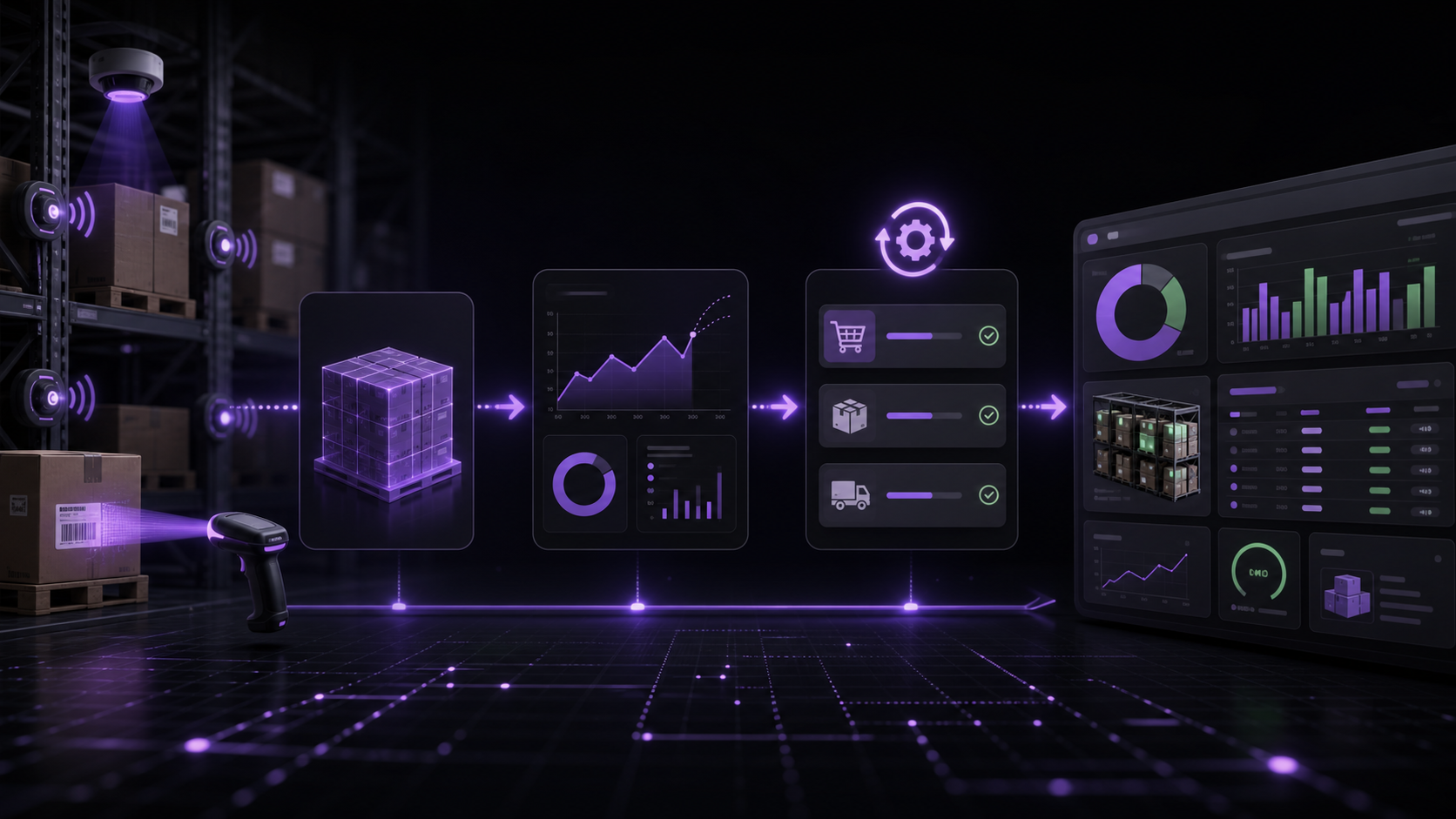
From real-time tracking to AI forecasting to auto-reorder — every aspect of inventory management is intelligent and automated.
Live inventory levels across all warehouses, locations, and bins — updated instantly with every transaction, transfer, or adjustment.
scikit-learn and Prophet models predict demand using historical sales data, seasonal patterns, trends, and external factors — 90%+ forecast accuracy.
Purchase orders are automatically generated when stock hits reorder points — with smart supplier selection, quantity optimization, and approval workflows.
Track and transfer stock across multiple warehouses and locations — with inter-warehouse transfers, allocation rules, and location-level visibility.
AI alerts before stockouts occur and flags overstock situations — optimizing inventory levels to minimize holding costs while ensuring availability.
Track supplier lead times, fill rates, quality metrics, and pricing — AI recommends the best supplier for each purchase order.
Inventory Intelligence is engineered with Python and ML frameworks chosen for forecasting accuracy and real-time inventory processing.
Stop guessing stock levels. Let AI predict demand, trigger reorders, and optimize your inventory around the clock.
AI-powered demand forecasting and auto-reorder ensure stock is always available — reducing stockout incidents by 85% and keeping customers satisfied.
Optimal stock levels mean less capital tied up in excess inventory — AI balances availability against holding costs to minimize waste.
Purchase orders generated automatically with optimal quantities and supplier selection — no manual monitoring or spreadsheet-based ordering.
Comprehensive analytics on stock levels, forecast accuracy, supplier performance, and inventory health — every decision backed by data.
Four steps to an inventory system that predicts demand and reorders automatically.
Integrate with your ERP, POS, or inventory system — or use the built-in inventory module to start tracking stock immediately.
Historical sales, seasonal trends, and lead times are analyzed to build demand forecasts with 90%+ accuracy.
When stock hits reorder points, purchase orders are auto-generated with optimal quantities and supplier selection — with optional approvals.
Dashboards show stock levels, forecast accuracy, and inventory health — continuously optimize reorder points and safety stock.
90%+ accuracy using scikit-learn and Prophet models. Forecast accuracy improves over time as more historical data is collected and patterns are refined.
Yes. Track stock across unlimited warehouses and locations — with inter-warehouse transfers, allocation rules, and consolidated visibility across all locations.
Absolutely. SAP, Tally, Zoho Inventory, QuickBooks, and custom ERPs — inventory data syncs in both directions with real-time updates.
When stock hits configurable reorder points, the system generates purchase orders automatically — with smart supplier selection, quantity optimization, and optional approval workflows.
Yes. AI flags overstock situations and recommends optimal stock levels — balancing availability against holding costs to minimize tied-up capital.
Book a consultation and see how Inventory Intelligence can reduce stockouts by 85% while cutting holding costs.